
Stretch Hooding vs Stretch Wrapping: Which Is Better for Load Stability?
When load integrity is the top priority, stretch hooding outperforms stretch wrapping. Both unitize a pallet with stretch film, but a stretch wrapper builds containment layer by layer, relying on friction between overlapping film, while a stretch hooder applies a single tube of film that grips the load horizontally and vertically at once. It is the difference between a load that is wrapped and one that is mechanically locked.
Here is how each method works, and why the stretch hood holds up better once loads hit the highway or the ocean.
How Stretch Wrapping Secures a Load
Stretch wrapping spirals a narrow web of film around the load as a turntable, arm, or ring rotates, while the carriage travels up and down to lay overlapping bands from base to top. Its holding force comes from film tension pulling inward and from the cling between each overlapping layer.
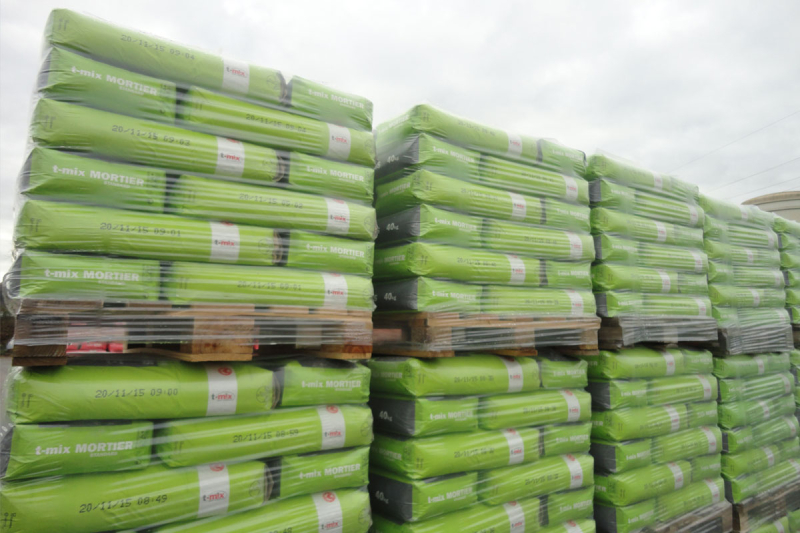
It is an effective, economical way to unitize stable loads. But its containment is cumulative, depending on the number of revolutions, the overlap, and the tension at every pass, and it acts mostly horizontally. Without top sheets or extra wraps, little force holds the load down onto the pallet.
How Stretch Hooding Secures a Load
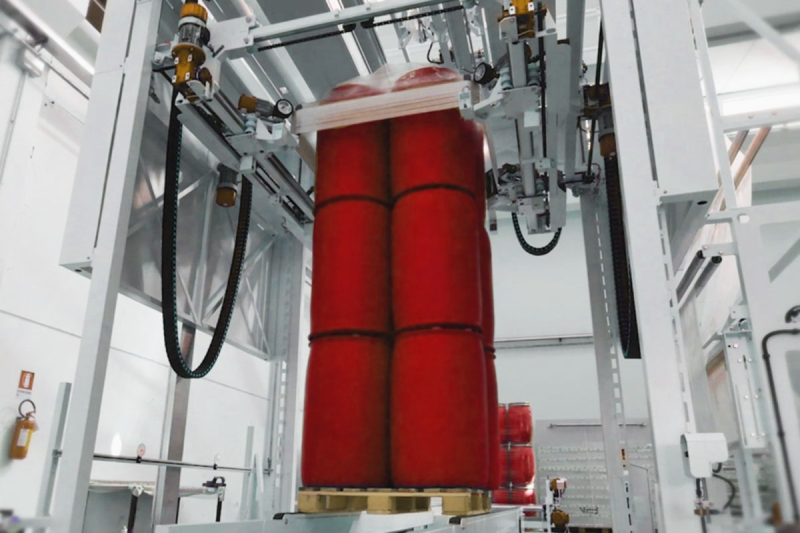
A stretch hooder covers the entire load with one continuous tube of film in a single pass:
- Film is drawn from a gusseted tube, cut to length, and sealed at the top to form a hood.
- Stretching fingers pull the hood wider than the load.
- The hood is lowered over the load, can be drawn under the pallet’s bottom edge, and is released.
- The film recovers and contracts tightly around the load.
Because the film is stretched in both directions, the hood exerts simultaneous horizontal and vertical tension, squeezing the load inward while pulling it down toward the pallet, with no overlapping layers relying on cling.
The Mechanical Lock: Five-Sided Containment
A stretch hood covers all four sides and the top of the load, and when drawn under the pallet, it locks load and pallet together. Every unit is held by the same continuous force, turning a stack of products into a single monolithic load.
That is what prevents shucking, where a load slides up out of its wrap or shifts off the pallet after repeated braking and vibration. With vertical tension and a closed top, a hooded load has no open end to escape through. The closed top also shields product from rain, dust, and debris.
Consistent Snap-Back Force vs. Wrapping Arm Variability
A stretch hood’s holding force comes from the film’s elastic recovery, not the precision of a moving part. Stretched larger than the load and then released, the hood snaps back with the same force on every side of every pallet.
Stretch wrap containment, by contrast, can vary with carriage speed and overlap, pre-stretch and tension settings, the number of top and bottom wraps, and tension changes at corners. A well-maintained wrapper performs well, but a stretch hooder removes most of that variability for operations that need identical results every shift.
Built for High-Vibration Transit: Sea Freight and Long-Haul Trucking
The real test of load stability happens miles after the packaging line. Long-haul trucking brings hours of road vibration plus braking and cornering forces. Sea freight adds engine vibration, vessel roll and pitch, multiple handoffs, and weeks of humidity and temperature swings.
Over time, vibration can loosen the cling between spiral-wrapped layers, and a little slack allows more movement. That is how loads arrive leaning or shucked. A stretch hood has no layers to work loose, so the load arrives as it left, without the rejected shipments and damage claims that follow transit failures.
The Premier Choice for Unstable and High-Density Loads
Stretch hooding pays off most on the loads that are hardest to keep together:
- Unstable or top-heavy loads that tend to lean or sway
- Slippery products such as bags and sacks and bottles
- High-density loads like bricks and blocks and other construction materials
- Loads stored outdoors that need weather protection
Handle-It’s SH-FA-5000, SH-FA-6000, and SH-FA-7000 stretch hooders handle loads up to 5,500 lbs at roughly 70 to 280 pallets per hour, depending on model and pallet size.
Stretch Hooding vs. Stretch Wrapping at a Glance
| Factor | Stretch Hooding | Stretch Wrapping |
| Application | One continuous tube, one pass | Overlapping spiral bands |
| Holding force | Elastic snap-back of the film | Film tension plus layer-to-layer cling |
| Direction of force | Horizontal and vertical | Mostly horizontal |
| Containment | Five-sided, can lock to pallet | Four sides; top needs a separate sheet |
| Consistency | Uniform on every load | Varies with machine settings and overlap |
| Best for | Unstable, high-density, or long-distance loads | Stable, uniform loads and budget-sensitive lines |
Where Stretch Wrapping Still Fits
Stretch wrapping is still a smart choice for stable, uniform loads, shorter shipping lanes, and lower-volume lines, where a semi-automatic or automatic pallet wrapping machine delivers reliable containment at a lower upfront cost. But when transit damage is not an option, stretch hooding is the technology built for the job.
Protect Every Load with Handle-It
As end-of-line packaging experts, Handle-It helps manufacturers and distributors match the right containment technology to their loads, lines, and shipping lanes. Whether you need the five-sided lock of a stretch hooder or the versatility of a stretch wrapper, our team will help keep every pallet intact from your dock to your customer’s. Explore our equipment below or contact us to get started.