
Is Stretch Hooding Worth the Investment for High-Throughput Facilities?
For high-throughput facilities, stretch hooding is often worth the investment once traditional wrapping systems can no longer keep pace with production. When multiple stretch wrappers are required just to keep up—or when load containment begins slowing down the line—the issue isn’t just efficiency, it’s a bottleneck.
Stretch hooders solve this by dramatically increasing throughput, often replacing two or three wrapping machines with a single, fully automated system. The result is a faster, more consistent end-of-line packaging process and a lower cost per pallet over time, making the higher upfront investment a practical, long-term decision rather than a luxury.
When Stretch Wrapping Becomes the Bottleneck
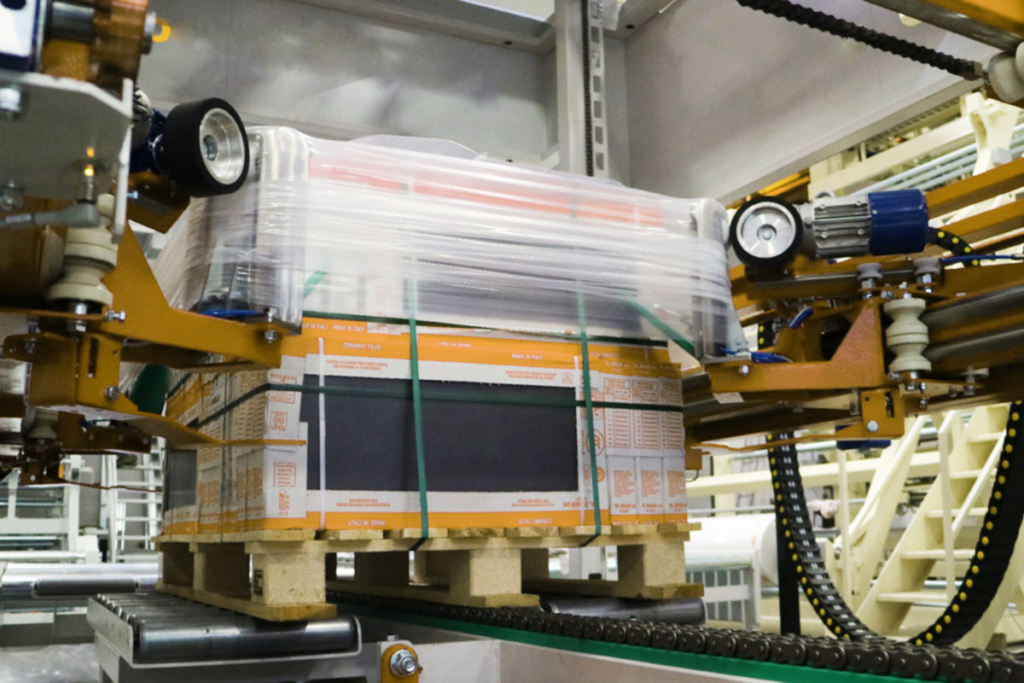
Most facilities don’t immediately jump to stretch hooding because stretch wrappers are familiar, relatively affordable, and widely used. But as throughput increases, facilities often find themselves stacking multiple wrapping machines just to keep pace.
That approach comes with tradeoffs:
- More machines to maintain
- More floor space consumed
- More operators required
- More points of failure
Even then, output may still lag behind production.
Stretch hooding changes that equation entirely.
Replacing Multiple Machines with One System
A single stretch hooder can dramatically outperform traditional pallet wrapping systems. Depending on the model and pallet size, throughput can reach levels that make multiple wrappers unnecessary:
- SH-FA 5000: up to 70 pallets/hour
- SH-FA-6000: up to 280 pallets/hour
- SH-FA-7000: up to 80 pallets/hour
In practical terms, one stretch hooder can often replace two or even three automatic stretch wrappers.
But the real advantage isn’t just speed—it’s consistency. Stretch hooders operate with zero operator intervention, applying a uniform, secure hood to every load without variability. That eliminates the performance dips that come with manual involvement or semi-automated processes.
The Hidden Cost Savings Add Up
The initial investment in a stretch hooder is higher than that of a traditional stretch wrapping system, but focusing only on upfront cost misses the bigger picture.
High-throughput facilities benefit from several “hidden” financial gains that significantly lower the total cost per pallet over time.
1. Reduced Downtime from Film Changes
Stretch hood systems use larger film rolls and more efficient application methods, reducing changeover frequency by up to 50%. That means less downtime, fewer interruptions, and a smoother, more continuous operation.
2. Labor Optimization
With no need for operator involvement, facilities can reallocate labor to higher-value tasks. In an environment where labor shortages are a growing concern, this is a strategic advantage, not just a cost savings.
3. Reclaimed Floor Space
Replacing multiple stretch wrappers with a single stretch hooder frees up valuable floor space. That space can be repurposed for production expansion, additional automation, or improved material flow.
4. Fewer Maintenance Demands
Consolidating equipment reduces the number of machines that require service, spare parts, and routine maintenance. Over time, this simplifies operations and reduces long-term maintenance costs.
Beyond ROI: The Cost of the Bottleneck
Traditional ROI calculations often focus on equipment cost versus direct savings. But in high-throughput environments, the more important question is: What is the bottleneck costing you?
When load containment can’t keep up with production:
- Pallets are backed up on the line
- Throughput is artificially capped
- Labor is stretched thin trying to compensate
- Growth opportunities are limited
A stretch hooder doesn’t just reduce costs—it removes the constraint entirely. It allows the end-of-line process to match or exceed upstream production speeds, unlocking the full potential of the facility and providing a high return on investment.
For a comprehensive overview of the stretch hooding process, including film specifications and detailed machine comparisons, download our Stretch Hooding Guide.
A Foundation for End-of-Line Packaging Automation
Stretch hooding also plays a critical role in broader automation strategies. Because the process is fully automated and highly consistent, it integrates seamlessly into modern, high-efficiency packaging lines.
For facilities looking to move toward lights-out operations or reduce reliance on manual labor, a stretch hooder is more than a single upgrade—it’s a foundational piece of the system.
So, are Stretch Hooders Worth the Investment?
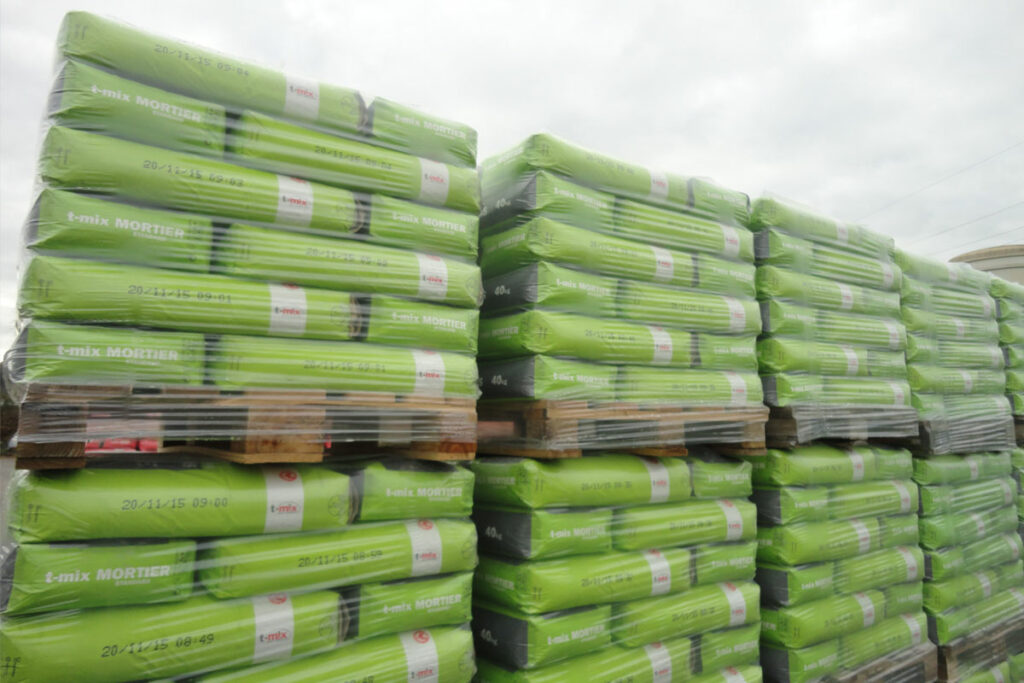
For low- to mid-volume operations, traditional pallet wrapping systems may still make sense. But for high-throughput facilities approaching or exceeding their current capacity, the answer becomes clearer.
When multiple wrappers are required just to keep up…
When labor availability becomes unpredictable…
When downtime and inefficiencies start impacting output…
That’s the tipping point.
At that stage, a stretch hooder isn’t just worth the investment—it’s the smarter long-term decision.
Moving Forward with the Right Stretch Hooding Partner
At Handle It, we understand that end-of-line packaging is more than just a final step—it’s a critical component of overall operational efficiency. Our team works with high-throughput facilities to identify bottlenecks, evaluate automation opportunities, and implement solutions that deliver lasting performance improvements.
If you’re evaluating whether stretch hooding is the right move for your operation, our team is here to help.