
Signs Your Facility is Ready to Automate Pallet Strapping
Manual pallet strapping can make sense at lower volumes. But as production grows, the process can become a constraint on throughput, labor, and load quality.
The warning signs are usually visible in the workflow: pallets waiting to be strapped, rising labor demands, recurring transit damage, and increasing material or safety costs.
At that point, automation is less about speed alone and more about creating a more predictable end-of-line packaging process.
Here are some of the strongest signs that it may be time to automate.
1. Finished Pallets Are Staging at the Strapping Station
A growing line of finished pallets is one of the clearest signs that manual strapping is limiting throughput.
If production is keeping pace but completed loads are waiting for strapping, the bottleneck has moved downstream. That can create congestion, delay shipping, and force employees to rush through a process that still requires consistency.
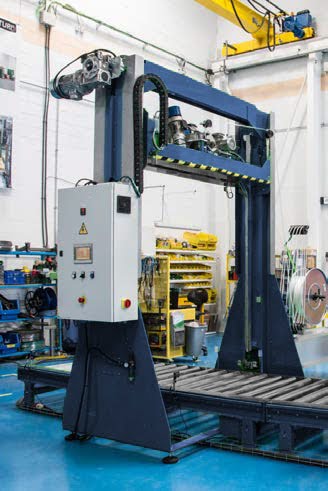
A fully automatic pallet strapper helps remove that constraint by automating the feeding, tensioning, sealing, and cutting process for higher-volume applications.
2. Labor Costs Are Increasing With Production
If every increase in pallet volume requires more labor at the strapping station, scaling becomes expensive.
Manual strapping ties throughput directly to staffing. Additional shifts, overtime, or added headcount may be needed simply to keep finished loads moving. Turnover, absenteeism, and difficulty filling repetitive end-of-line roles can put even more pressure on the process.
Automation reduces that dependency. Instead of continually adding labor to maintain output, facilities can automate repetitive strapping tasks and reallocate employees to work where human judgment and flexibility provide more value.
3. Product Damage or Load Inconsistency Is Becoming a Recurring Problem
A secured pallet should not depend on which employee is working at the strapping station.
Manual processes can introduce variation in strap placement, tension, and seal quality. As volume increases—or employees rush to clear a backlog—that variation can become harder to control.
Inconsistent load securement can contribute to shifting or damaged products during handling and transportation. The resulting costs may include replacement shipments, additional labor, customer complaints, and lost product.
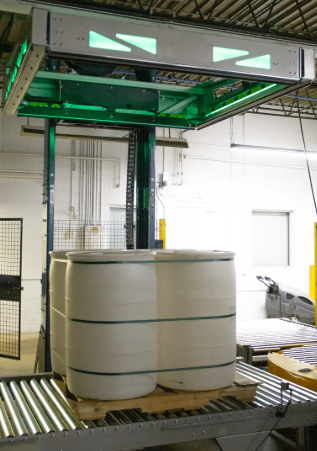
Automatic strapping systems provide greater control over strap tension, placement, and sealing, helping facilities produce more repeatable results from one pallet to the next.
4. You’re Using More Strapping Material Than Expected
Strap waste is easy to overlook because the cost is spread across individual loads.
Excessive strap length, unnecessary applications, and inconsistent tension can all increase material consumption over time. Across a high-volume operation, relatively small differences per pallet can become a meaningful packaging expense.
Automated systems provide more control over how strapping is applied, making material use easier to standardize and manage.
For managers evaluating automation, comparing strap consumption against pallet volume can help uncover costs that may otherwisebe buried in the packaging budget.
5. Manual Strapping Is Creating Ergonomic and Injury-Related Costs
Manual pallet strapping can involve repeated bending, reaching, walking around loads, and operating tensioning equipment throughout a shift.
As volume increases, those repetitive demands can create more than an ergonomic concern. Discomfort or injuries may lead to lost work time, modified-duty assignments, overtime coverage, or other costs associated with maintaining production when an employee cannot perform the task normally.
Automation reduces the amount of repetitive manual handling required at the strapping station. That can help facilities address the physical demands of the process while also reducing the operational costs that can follow when those demands become difficult to sustain.
Look Beyond the Purchase Price of Automation
The equipment cost is easy to see. The hidden cost of staying manual is not.
When evaluating automation, consider:
- Production delays from staged pallets
- Labor, overtime, and staffing requirements
- Product damage and inconsistent load securement
- Excessive strapping material use
- Ergonomic and injury-related costs
Looking at these expenses together provides a more accurate picture of whether the current process can support future production demands.
Has Your Facility Outgrown Manual Pallet Strapping?
If pallets are backing up, labor costs are climbing, or packaging costs are becoming harder to control, your strapping process may no longer fit the scale of your operation.
Handle-It provides automatic horizontal and vertical pallet strapping systems for high-volume end-of-line packaging applications. Our team can help evaluate your workflow and identify a solution that supports safer, more consistent, and more predictable throughput.