
Warehouse Guard Rail Systems: Why They Matter & Where to Use Them
In busy warehouses and manufacturing facilities, forklifts, equipment, and employees often move through the same areas. Without clear separation, a routine traffic pattern can quickly become a safety concern or a costly damage risk.
Warehouse guard rail systems create physical and visual barriers that help protect people, equipment, inventory, and facility infrastructure from vehicle impact. Installing guard rail systems is a practical way to improve safety and reduce avoidable damage in active material handling environments.
What Is a Warehouse Guard Rail System?

A warehouse guard rail system is a floor-mounted barrier used to separate people, equipment, structures, and traffic zones inside an industrial facility. It is commonly installed in areas where forklifts, pallet jacks, and other material handling equipment operate near employees or valuable assets.
Guard rail systems can help protect:
- Pedestrian walkways
- Workstations
- In-plant offices
- Pallet racking
- Conveyor lines
- Dock areas
- Machinery and equipment
- Building walls and columns
- Electrical panels, water lines, and other fixed assets
In many facilities, guard rails serve two purposes at once. They create a strong physical barrier against impact while also giving operators a clear visual boundary for traffic flow.
5 Reasons Warehouse Guard Rails Are a Smart Facility Investment
Forklift impact can be expensive. A single incident can damage racking, inventory, walls, machinery, or building infrastructure, then disrupt workflow while repairs are completed or affected areas are taken out of service.
Compared to the cost of equipment repairs, inventory loss, downtime, or injury risk, guard rails are a practical long-term investment. It helps protect high-value areas while supporting a more organized facility layout.
1. Protect Employees and Pedestrian Walkways
Employee safety is one of the most important reasons to install warehouse guard rails. In facilities where people walk near forklift lanes, production areas, dock zones, or storage aisles, guard rails help create a clear separation between pedestrian traffic and powered equipment.
This is especially useful near employee entrances, walkways, crosswalks, break rooms, restrooms, time clocks, production work areas, and in-plant offices.
A clearly defined walkway helps employees understand where to walk and helps equipment operators identify areas where pedestrian traffic is expected.
2. Create Clear Forklift Traffic Patterns
Guard rails can help organize the way forklifts and other equipment move through a facility. Bright, visible railing gives operators a clear boundary and helps define where vehicle traffic should and should not go.
This is valuable in areas with frequent turns, narrow travel lanes, mixed traffic, or heavy pallet movement. By creating a consistent traffic pattern, guard rails can help reduce unnecessary contact with racks, walls, equipment, and work areas.
In high-volume facilities, this added structure can support smoother material flow and reduce the risk of avoidable impact damage.
3. Protect Equipment, Offices, Walls, and Infrastructure
Warehouses often contain expensive equipment and critical infrastructure located near vehicle traffic. Without protection, a forklift impact can damage far more than the visible surface of a wall or machine.
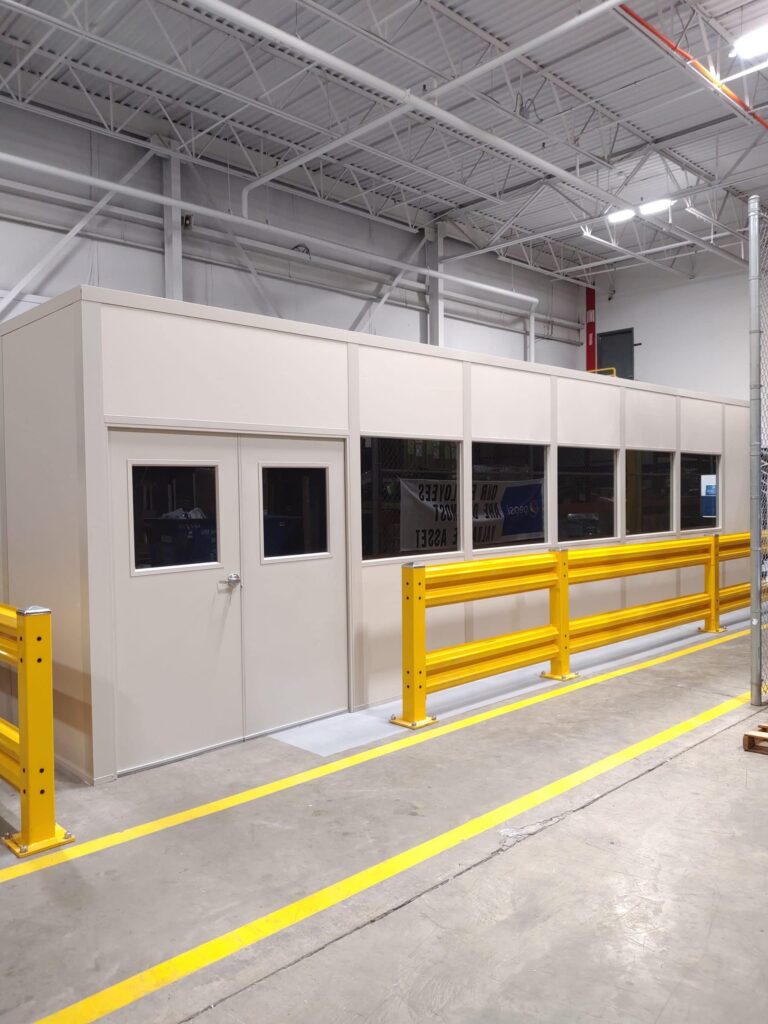
Guard rails can help protect production equipment, packaging lines, conveyors, in-plant offices, dock equipment, electrical panels, water pipes, air lines, building columns, door frames, and walls.
For many operations, preventing one serious impact can justify the investment in protective guarding. This is especially true around assets that would be costly to repair or disruptive to take offline.
4. Reduce Damage to Pallet Racking and Inventory
Pallet racking is one of the most important systems in a warehouse, but it is also one of the most exposed. Rack ends, lower uprights, and aisle corners are common impact points for forklifts and pallet handling equipment.
Guard rails can help protect racking in areas where lift trucks turn, enter aisles, or operate near stored inventory. By creating a buffer between equipment traffic and rack structures, guard rails help reduce the chance of damaged uprights, displaced inventory, and lost storage capacity.
This can be especially valuable in busy distribution centers, food and beverage facilities, manufacturing plants, and e-commerce warehouses where uptime and inventory control are critical.
5. Support Long-Term Facility Flexibility
Warehouse layouts change over time. New equipment, updated workflows, added storage areas, and shifting production needs can all affect how people and equipment move through a facility.
Modular guard rail systems can often be expanded, adjusted, or reconfigured as needs change. This makes guard railing a flexible safety investment for facilities that expect growth or layout changes over time.
Instead of treating safety barriers as a one-time installation, facility teams can use guard rails as part of an adaptable protection plan.
Where to Install Warehouse Guard Rails
The best locations for guard rails are areas where people, equipment, and valuable assets are most exposed to vehicle impact. In many facilities, these areas become clear after reviewing forklift routes, pedestrian paths, and past damage patterns.
Common installation areas include:
- Pedestrian walkways: Separate foot traffic from forklift lanes, production zones, and storage areas.
- Workstations and in-plant offices: Create protected boundaries around employees working near warehouse traffic.
- Machinery and equipment: Help protect conveyors, packaging equipment, control panels, compressors, and production machinery from accidental contact.
- End-of-rack aisles: Reduce impact risk where forklifts turn tightly near pallet rack rows.
- Conveyor lines: Protect conveyor frames, supports, and transfer points that are central to material flow.
- Dock and shipping areas: Help protect doors, walls, dock equipment, staged product, and pedestrian areas in busy shipping zones.
- Mezzanines and elevated work areas: Define protected areas around stairs, access points, and elevated work zones.
- Building columns and fixed assets: Protect structural columns, electrical panels, water lines, air lines, door frames, and other facility infrastructure.
Build a Safer Facility with Handle-It Guard Rail Systems
Warehouse guard rail systems help protect employees, equipment, inventory, racking, and infrastructure from avoidable impact damage. They also help create cleaner traffic patterns and more defined work zones in demanding material handling environments.
Handle-It supplies heavy-duty guard rail systems, custom guarding solutions, and more for warehouses, manufacturing plants, distribution centers, and other industrial facilities. If you’re ready to improve your warehouse protection, our team can help you identify the right solution.