
Comparing Plastic and Steel Warehouse Protection: Cost, Durability, and Risk
Selecting warehouse protection equipment is often framed as a simple choice: plastic for flexibility and aesthetics, or steel for strength and durability. However, when you look closer at the total cost of ownership, real-world impact performance, and long-term risk, the narrative that plastic is the “modern, superior” choice starts to fall apart.
This comparison is critical whether you are looking at steel rack protectors for your storage rows or comprehensive guard rail systems to protect pedestrians and equipment. While plastic (HDPE) versions of these products are popular, many facility managers are surprised to learn that they often come with a significantly higher upfront cost.
In fact, the initial cost of steel can be up to 40% lower than plastic alternatives. If you’re paying a premium for plastic, you have to ask: Is there real long term value given such a high initial cost?

The Cost Question: Is Plastic Really the Right Option?
Plastic safety guarding is frequently positioned as the “superior” or “modern” choice. But, HDPE solutions come at a premium price compared to steel with a cost gap that can only be made up if you have frequent collisions.
Why?
- The cost per section of plastic guarding can be 40% higher
- There are positive attributes to the plastic flexing but wide ranging application could be very costly
- Aesthetic appeal (bright colors, smooth finishes) increases demand
However, price alone doesn’t equal value.
In addition to steel being highly effective at protection it offers a lot more flexibility within the design and capability to suit your spacing needs and overall layout. Plastic guard rails are often set sizes and one size fits all is not always the best option.
Durability in the Real World: Flexibility vs. Structural Strength
In high-traffic warehouse environments where forklifts and pallet jacks are constantly in motion, impacts are forceful and often unpredictable. Both plastic and steel are engineered to provide high-level safety, but they protect your assets using different mechanical principles.
The “Flex Factor”
Plastic protectors are often marketed for their ability to flex and return to shape after an impact. While this is an advantage for preventing damage to the protector itself during minor scuffs, facility managers must consider the deflection. In a heavy hit, a plastic guardrail or rack protector may flex and could present other issues.
The Rigid Defense of Steel
Steel is engineered to act as a definitive, rigid barrier. Rather than flexing, steel rails are designed to:
- Deflect and Distribute: Steel stops the movement of the vehicle immediately, distributing the impact energy through the anchoring system and into the floor, rather than the equipment.
- Greater Customization: Unlike molded plastic, steel is easily customized. This allows for flexible features, specialized heights, and tailored layouts that adapt to the specific needs of your facility.
- Industrial Mass: Handle-It’s steel solutions are built with high-strength materials capable of withstanding impacts up to 10,000 lbs, ensuring that even under extreme force, the barrier remains the first and final line of defense.
By focusing on steel as a “structural shield” rather than just a “flexible cushion,” you ensure that the most expensive parts of your warehouse—the racks and the people—remain untouched.
The “Replacement Trap”: Where Costs Really Add Up
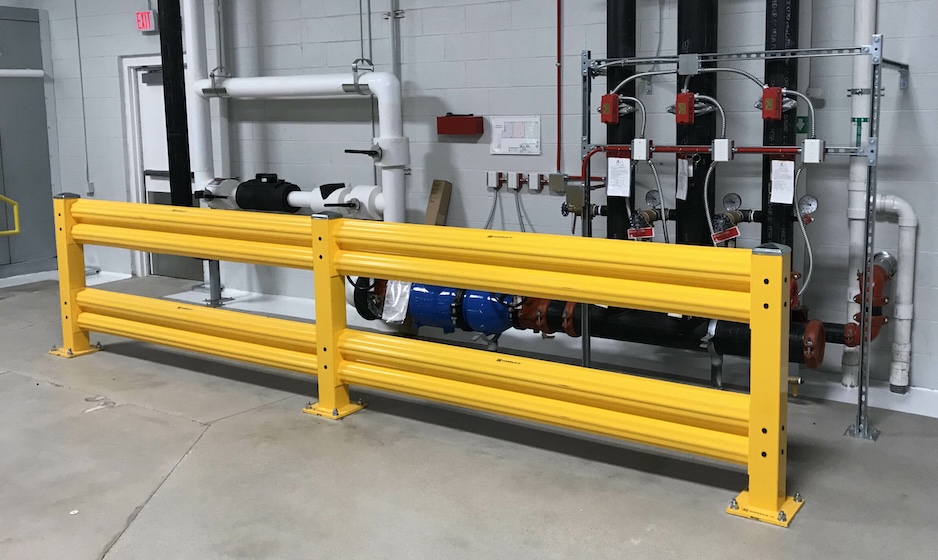
A common misconception in warehouse protection is the idea that plastic costs less over the long term because you won’t have to replace it after an impact. Steel guarding systems are completely modular and individual rails can be replaced for a few hundred dollars. It would take a great amount of replacement to erase the massive 40% material price difference.
Cost of Installation & Space:
Two additional hidden costs are installation time and the space required. Products from popular plastic guarding system brands often require multiple pieces to be fitted onto posts or rails. Since some are only attached by hand, installation can be time-consuming and fatiguing, especially for large projects involving over 1,000 feet of guarding. Furthermore, some systems utilize posts that are significantly larger than a typical 5-inch guard rail post, which can consume valuable space in walkways and near equipment.
The Reality of Steel Maintenance
In 50+ years of Handle-It’s experience, it is actually quite rare to have to ship replacement steel rails. Our Warehouse Protection Products are built to take the hit so your facility doesn’t have to.
The “long-term cost” of steel only becomes a factor if your facility experiences extreme, high-volume impacts that damage the floor anchors or the rails themselves. In the vast majority of cases, steel remains a one-time investment that provides a definitive safety barrier, whereas the hidden costs of plastic “flexing” can lead to repeated structural headaches.
Make the Smarter Investment in Warehouse Protection
Choosing between plastic and steel warehouse protection isn’t just about materials—it’s about performance under pressure, total cost of ownership, and the operational flexibility your facility requires.While plastic solutions have their place in specialized areas, outfitting an entire facility with plastic is often cost-prohibitive compared to the lower initial investment and superior customization offered by steel. At Handle It, we specialize in heavy-duty warehouse protection solutions engineered to perform where it matters most. If you’re looking to avoid the “replacement trap” and invest in a predictable, long-term safety barrier for your guard rail systems and rack protectors, our team is here to help.