
When to Use Offset Footplates for Warehouse Guard Rail Systems
Warehouse guard rail systems are designed to protect people, equipment, racking, inventory, and facility infrastructure from forklift and vehicle impact. But effective protection depends on more than choosing the right rail height or post style. The way each post is positioned and anchored can also make a difference.
Offset footplates give facilities more flexibility when installing guard rails in tight or high-traffic areas. By shifting the post toward one side of the base plate, offset footplates help align the rail closer to the area being protected while keeping the base plate and anchor hardware out of the way.
This is especially useful near pallet rack ends, pedestrian walkways, access points, and other areas where clearance matters.
What Are Offset Footplates?
Offset footplates are base plates used with warehouse guard rail posts. Unlike standard centered footplates, an offset footplate positions the post toward one side of the plate.
This design allows the guard rail to sit closer to a rack, wall, walkway, machine, or other fixed point without placing the full base plate directly in the traffic path. In facilities where every inch of aisle width matters, this added flexibility can help create a cleaner and more functional guard rail layout.
Offset footplates are a small component, but they can solve common installation challenges in busy material handling environments.
Why Footplate Placement Matters
Guard rails are often installed in areas where forklifts, pallet jacks, pedestrians, and equipment all operate in close proximity. If the footplate is not positioned correctly, it can create clearance issues or interfere with day-to-day movement through the facility.
Proper footplate placement can help:
- Preserve aisle and walkway clearance
- Keep anchor heads away from forklift tires
- Reduce trip hazards near access points
- Align the rail more closely with the area being protected
- Improve protection in confined spaces
- Create a cleaner finished installation
A standard, centered footplate works well in many open areas. However, when a guard rail needs to be installed close to a rack end, wall, doorway, or walking path, an offset footplate may be the better option.
Where Offset Footplates Are Most Useful
Offset footplates are most valuable in areas where space is limited or where standard footplates would create an obstruction. They allow the guard rail system to provide protection without unnecessarily reducing usable space.
End of Pallet Rack Rows
The end of a pallet rack row is one of the most common places to use offset footplates. Rack ends are frequently exposed to forklift turns, especially in narrow aisles or high-traffic storage areas.
When a guard rail is installed at the end of a rack row, an offset footplate can help position the rail closer to the rack while keeping the base plate out of the forklift tire path. This helps protect the rack end without taking up more aisle space than necessary.
It can also help keep anchor heads from being damaged by repeated tire contact, which is especially important in areas where lift trucks turn tightly around rack rows.
Pedestrian Walkways
Guard rails are often used to separate pedestrian walkways from forklift routes, production areas, dock zones, or storage lanes. In these areas, the rail needs to protect people without creating new obstacles in the walking path.
Offset footplates can move the base plate away from the pedestrian side of the rail. This helps reduce trip hazards and creates a cleaner walkway edge.
This is especially useful near employee walkways, facility entrances, maintenance paths, and designated crossing points where people need clear access through the area.
Access Points and Openings
Many guard rail layouts need openings for doors, gates, maintenance access, equipment access, or material flow. These access points should be easy to move through without unnecessary obstructions at floor level.
Offset footplates can help keep the base plate and anchor hardware out of the opening while still supporting the guard rail post. This makes the area easier to navigate for employees and helps reduce interference with carts, pallet jacks, and other equipment.
In some layouts, offset footplates may also be paired with lift-out rail sections where periodic access is needed.
Tight or Confined Spaces
Not every warehouse has extra room for standard guard rail placement. Offset footplates are useful when a guard rail needs to be installed close to walls, columns, conveyors, dock equipment, machinery, or existing rack systems.
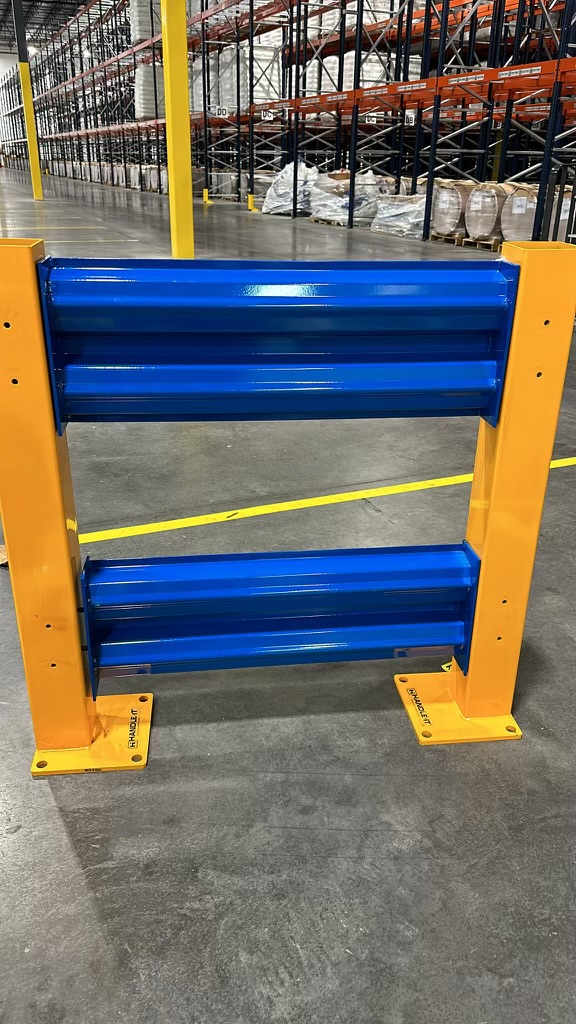
By allowing the post to sit closer to the protected area, offset footplates help facilities maintain clearance for forklifts, pallets, pedestrians, and maintenance access.
This can be valuable in older facilities, retrofitted warehouses, and production environments where the layout was not originally designed around modern traffic separation or impact protection.
Forklift Travel Lanes
In forklift travel lanes, base plate placement matters. If anchor heads or footplates sit too far into the traffic path, they may be repeatedly contacted by forklift tires.
Offset footplates can help move the rail post into position while keeping more of the base plate outside the main tire path. This helps reduce unnecessary wear on anchors and creates a cleaner path for vehicle movement.
For facilities with repeated impact issues or tight turning areas, this can improve both protection and long-term maintenance.
Offset Footplates vs. Standard Footplates
Offset footplates are not required for every guard rail installation. The best choice depends on the layout, traffic pattern, and clearance available in the area.
| Footplate Type | Best Used For | Primary Benefit |
| Standard footplate | Open areas with adequate clearance | Simple, centered post installation |
| Offset footplate | Rack ends, walkways, access points, and tight spaces | More precise rail placement and improved clearance |
| Corner post or plate configuration | Guard rail layouts that change direction | Cleaner transitions around corners |
In open areas, standard footplates may provide everything the installation needs. In tight spaces or high-traffic zones, offset footplates give facilities more control over the final rail position.
Choose the Right Guard Rail Configuration with Handle-It
Offset footplates are a practical solution for guard rail installations near rack ends, pedestrian walkways, access points, forklift travel lanes, and confined spaces. They help improve rail alignment, protect anchor hardware, preserve clearance, and reduce unnecessary obstructions.
Handle-It supplies heavy-duty warehouse guard rail systems along with many other warehouse protection solutions for demanding material handling environments. Whether you are planning a new guard rail layout or upgrading an existing protection system, our team can help you choose the right configuration for your facility.